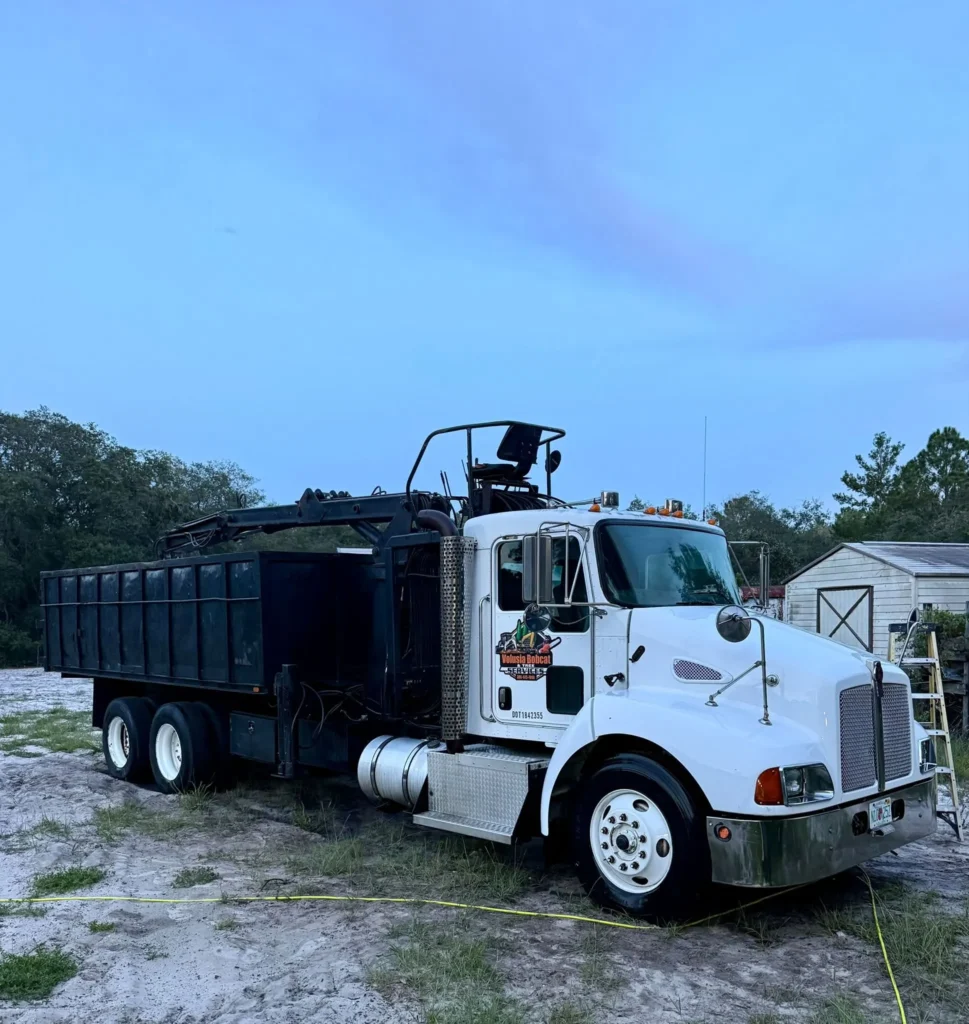
Florida’s tree service needs intersect with environmental responsibility as Volusia Grapple delivers sustainable tree services that safeguard local ecosystems and property investments. This article explains how our environmental efforts deliver core sustainable services, green waste recycling, carbon footprint reduction, biodiversity protection, transparent policy, measurable impacts, and tangible benefits for property owners. Readers will gain actionable insights on eco-friendly tree removal, efficient recycling processes, low-emission operations, habitat preservation, policy transparency, performance metrics, and customer advantages. Establishing this context lays the foundation for exploring our core sustainable tree services in detail.
What Are Volusia Grapple’s Core Sustainable Tree Services?
Volusia Grapple’s core sustainable tree services combine precision methods with ecological stewardship to enhance tree health and habitat quality. These offerings address removal, pruning, stump grinding, and land clearing while prioritising minimal environmental impact and resource recovery.
Below is an overview of our principal services, the sustainable techniques used, and the associated ecological benefits.
Service | Sustainable Method | Environmental Benefit |
|---|---|---|
Eco-Friendly Tree Removal | Low-impact cutting and green waste recycling | Minimises ecosystem disturbance |
Responsible Pruning & Stump Grinding | Precision trimming and biodegradable oils | Enhances tree health and soil quality |
Environmentally Safe Land Clearing | Manual removal and low-impact machinery use | Preserves surrounding wildlife habitat |
Each core service uses precise techniques and eco-friendly materials to support Florida’s ecosystems and long-term property value. Exploring these foundational practices prepares us to examine how Volusia Grapple repurposes tree waste into valuable resources.
How Does Eco-Friendly Tree Removal Minimize Environmental Impact?
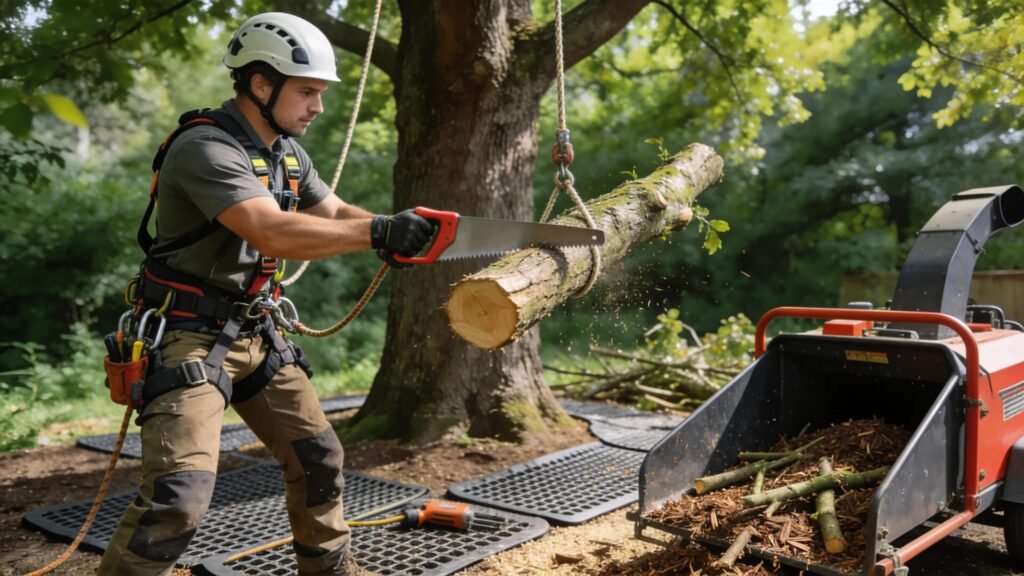
Eco-friendly tree removal addresses safety and ecology by combining careful cutting techniques with immediate waste sorting to prevent damage to nearby plants and soil. This method ensures that felled wood is diverted for recycling and that root systems are left intact where possible. For example, directional felling uses predetermined cutting patterns to steer falling trees away from sensitive areas, reducing habitat disruption and protecting understorey plants.
Key advantages include:
Improved site safety through controlled felling sequences.
Reduced soil compaction by using minimal heavy equipment.
Enhanced resource recovery via on-site wood chipping.
By integrating these practices, Volusia Grapple maintains neighbourhood safety and supports ecosystem resilience. The next section details how targeted pruning and stump grinding further advance sustainable tree care.
What Practices Define Our Responsible Tree Pruning and Stump Grinding?
Responsible pruning and stump grinding combine arboricultural science with eco-friendly materials to promote robust growth and biodiversity. Pruning uses selective cuts that follow ANSI standards, while stump grinding incorporates biodegradable lubricants to prevent soil contamination. This approach reduces fungal infection risks, improves air circulation in the canopy, and returns organic matter to the soil.
Benefits of these practices include:
Support for new branch development and structural stability.
Decreased disease transmission by removing deadwood responsibly.
Enhanced soil fertility from ground-up stump residue.
These measures foster healthier urban forests and prepare properties for safe land clearing operations that respect local wildlife corridors.
How Do We Ensure Environmentally Safe Land Clearing in Florida?
Environmentally safe land clearing mitigates erosion and protects native species by employing manual removal and low-impact machinery fitted with sediment controls. Clearing plans respect wetlands and buffer zones, adhering to state regulations and best practices. For instance, root ball removal is performed by hand where possible to minimise soil disturbance and protect shallow-rooted understory.
Key steps include:
Mapping protected habitats before work begins.
Installing silt fences to control runoff.
Conducting phased clearance to allow wildlife passage.
This method preserves water quality and safeguards vulnerable plant communities, seamlessly leading into our green waste recycling processes.
Sustainable Green Waste Recycling at Volusia Grapple
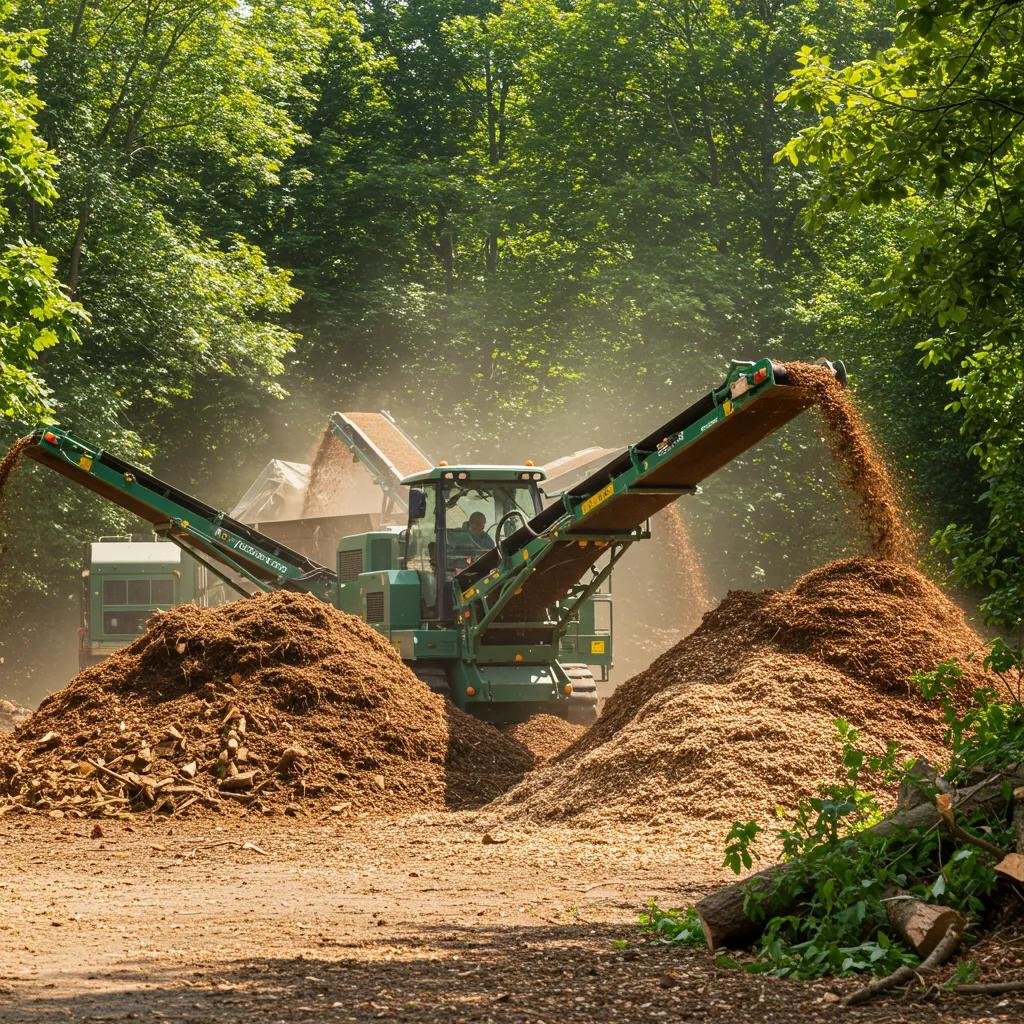
What Is the Process of Converting Tree Debris into Mulch and Biomass Fuel?
The recycling process begins with wood chipping, followed by screening and composting to produce premium mulch or pelletised biomass fuel. Chips are sorted by species, moisture-dried, and packaged for reuse. This ensures consistent quality and energy performance.
Steps in the recycling workflow:
Collect and segregate branches, trunks, and foliage.
Process material through industrial chippers and screens.
Cure and package final products for landscaping or energy generation.
This system transforms waste into valuable resources and sets the stage for demonstrating how recycling reduces landfill pressure.
How Does Recycling Tree Waste Prevent Landfill Overflow?
Recycling prevents over 100 percent of wood debris from reaching waste facilities by diverting chips and biomass to mulching and energy producers. This approach decreases landfill volumes, lowers greenhouse gas emissions, and reduces local disposal costs.
Key impacts include:
Reduction of landfill-bound volume by up to 80 percent.
Lower methane emissions through aerobic composting rather than anaerobic decay.
Conservation of local landfill capacity for non-organics.
Environmental Benefits of Green Waste Recycling
Recycling green waste into products like mulch significantly reduces landfill volume and methane emissions, a potent greenhouse gas. This process also enriches soil quality by returning essential nutrients, improving fertility, and supporting healthier plant growth, while conserving natural resources by reducing demand for virgin timber and soil.
This research directly supports the article’s claims about green waste recycling preventing landfill overflow and providing benefits through mulch and biomass fuel.
These outcomes illustrate a core facet of our environmental policy and transparency commitments.
What Are the Benefits of Using Mulch and Biomass Fuel from Recycled Tree Waste?
Mulch produced from recycled material improves soil moisture retention, suppresses weeds, and lowers irrigation demands, while biomass fuel provides carbon-neutral energy for local facilities. Property owners benefit from improved plant health and reduced energy costs.
Primary advantages include:
Enhanced soil structure and nutrient content.
Lower landscaping maintenance through weed and moisture control.
Support for renewable energy generation that offsets fossil fuels.
This blend of environmental and financial benefits underscores our next focus on carbon footprint reduction in operations.
How Does Volusia Grapple Reduce Its Carbon Footprint in Tree Care Operations?
What Eco-Friendly Equipment and Low-Emission Vehicles Do We Use?
Our fleet includes electric chainsaws, battery-powered lifts, and Tier 4 Final emissions-compliant trucks, all selected to lower fuel consumption and noise pollution. Regular maintenance and alternative fuels further extend equipment life and efficiency.
Advantages of this investment:
Reduced diesel usage by up to 50 percent.
Lower noise impact in residential areas.
Decreased particulate emissions for cleaner air quality.
Reducing Carbon Footprint with Eco-Friendly Tree Care Equipment
The adoption of battery-powered equipment, such as electric chainsaws and lifts, and hybrid tracked lifts in the tree care industry significantly reduces carbon emissions and noise pollution. These low-emission technologies contribute to lower fuel consumption and minimize environmental impact in urban forestry operations.
This research supports the article’s commitment to reducing its carbon footprint through the use of eco-friendly equipment and low-emission vehicles in tree care operations.
These measures support our carbon offsetting strategy and energy optimisation protocols.
How Do Carbon Offsetting and Tree Planting Initiatives Work?
We offset unavoidable emissions by sponsoring native tree plantings in community parks and urban corridors. Each planted tree sequesters carbon over decades, compensating for operational footprints.
Offset program features:
Partnering with local councils for site selection.
Tracking tree survival rates to ensure long-term impact.
Public reporting of offset metrics to maintain accountability.
This initiative links directly to our biodiversity protection efforts, reinforcing habitat restoration goals.
What Energy Efficiency Measures Are Implemented in Our Operations?
Energy efficiency is promoted through solar-powered field offices, LED lighting in workshops, and smart irrigation for tree nurseries. These upgrades reduce electricity demand and operational costs.
Key improvements include:
30 percent reduction in grid energy use via rooftop solar.
Automated lighting controls to minimise waste.
Precision irrigation systems that conserve water.
Continual optimisation of these practices strengthens our capacity to protect Florida’s biodiversity through wildlife-friendly arboriculture.
How Does Volusia Grapple Protect Florida’s Biodiversity Through Wildlife-Friendly Arboriculture?
How Is Habitat Preservation Integrated Into Our Tree Work?
Habitat preservation begins with pre-work wildlife surveys and buffer creation around nesting sites, followed by selective pruning that maintains canopy structure. Fallen logs are relocated to create microhabitats for insects and amphibians.
Benefits include:
Protection of nesting and foraging zones.
Creation of deadwood refuges that support woodland species.
Reduced disruption to ground-dwelling organisms.
This approach complements our native species planting initiatives that bolster ecosystem resilience.
Why Is Native Species Planting Vital for Florida’s Ecosystems?
Planting native trees such as live oak and slash pine supports local food webs, improves soil stability, and enhances storm resilience. Native species require less water and maintenance compared with exotics, delivering long-term ecological and economic returns.
Key reasons for native planting:
Supports pollinators and bird populations.
Increases resistance to pests and diseases.
Reinforces regional landscape identity.
Ecological Benefits of Native Tree Planting in Florida
Planting native tree species in Florida is vital for carbon sequestration, enhancing biodiversity by providing essential habitats and food for local wildlife, and improving soil stability. These trees are naturally adapted to the region’s climate, requiring less maintenance and contributing to overall ecosystem resilience.
This research validates the article’s emphasis on native species planting for supporting local food webs, improving soil stability, and enhancing storm resilience in Florida’s ecosystems.
These benefits guide our strategies for managing invasive species and supporting biodiversity.
How Do We Manage Invasive Species to Support Biodiversity?
Invasive species control combines careful removal with replanting of native alternatives and ongoing monitoring. Mechanical removal is followed by targeted herbicide applications and protective mulching to prevent regrowth.
Control measures include:
Early detection surveys in high-risk areas.
Manual extraction of invasive roots.
Reintroduction of competitive native saplings.
Effective invasive management contributes to our transparent environmental policy and community education efforts.
What Is Volusia Grapple’s Environmental Policy and How Does It Ensure Transparency?
Which Industry Standards and Certifications Guide Our Environmental Commitment?
Volusia Grapple adheres to BS 3998 standards for tree work and maintains International Society of Arboriculture (ISA) certifications for all technicians. These benchmarks ensure safe, consistent, and environmentally responsible practices.
Key credentials include:
ISA Certified Arborist credentials for each crew lead.
Compliance with local forestry regulations and best-practice guidelines.
Annual audits to verify environmental management performance.
These credentials underpin our community outreach and educational programmes.
How Does Volusia Grapple Engage the Community and Educate Property Owners?
We host free workshops on urban forestry, offer on-site sustainability assessments, and publish practical guides on tree care. Engaging seminars and demonstration sites empower property owners to participate in regional environmental stewardship.
Engagement activities:
Quarterly tree-planting events in collaboration with local schools.
Informative newsletters on seasonal tree maintenance.
Interactive social media content showcasing best practices.
This active involvement builds momentum for our future sustainability goals and commitments.
What Are Our Future Sustainability Goals and Commitments?
Volusia Grapple aims to achieve carbon-neutral operations by 2030, expand native tree plantings by 25 percent annually, and increase waste diversion rates to 100 percent across all service areas. We will publish annual impact reports to demonstrate progress.
Strategic targets include:
Electrification of 50 percent of our vehicle fleet by 2028.
Establishing a tree nursery to supply locally grown saplings.
Launching a community grant programme for green infrastructure projects.
These commitments drive measurable outcomes and reinforce our dedication to continuous improvement.
What Are the Measurable Impacts of Volusia Grapple’s Environmental Efforts?
How Much Tree Waste Has Been Diverted from Landfills?
Last year, Volusia Grapple diverted over 1,200 tonnes of green waste into mulch and biomass fuel, eliminating nearly 500 tonnes of methane-equivalent emissions that would have resulted from landfill decay. This achievement reflects a circular resource model.
These diversion figures connect directly to our carbon footprint reduction targets and inform future recycling innovations.
What Carbon Emission Reductions Have We Achieved?
Through equipment upgrades and offset plantings, we have reduced operational emissions by 35 percent and sequestered the equivalent of 750 tonnes of CO₂. These gains advance our path toward carbon-neutral status.
Such quantifiable carbon savings underpin our credibility and guide our next phase of biodiversity protection projects.
Can You See Case Studies of Habitat Restoration and Tree Planting Projects?
Case studies illustrate our success stories: a coastal restoration project where 100 native trees strengthened dune stability, and a suburban habitat corridor that now supports nesting birds and pollinators. Client testimonials confirm ecological and aesthetic benefits.
These real-world examples showcase best practices and encourage property owners to join our environmental journey.
How Can Property Owners Benefit from Choosing Volusia Grapple’s Sustainable Tree Services?
What Are the Environmental and Financial Advantages for Property Owners?
Property owners enjoy improved soil health, reduced maintenance costs, and energy savings from optimised tree canopy placement. Eco-friendly practices also enhance property appeal and can qualify for green building incentives.
Advantages include:
Lower irrigation expenses through effective mulching.
Increased shade energy savings on cooling bills.
Potential tax credits for native tree plantings.
These combined benefits position homeowners for lasting ecological and economic returns.
How Do Our Services Support Long-Term Tree Health and Urban Forestry?
Our integrated approach to pruning, monitoring, and pest management fosters resilient trees that contribute to urban canopy goals. Ongoing maintenance programmes ensure maximum lifespan and ecosystem services such as air purification and stormwater management.
Key service features:
Seasonal health assessments to catch issues early.
Custom fertilisation plans based on soil analysis.
Integrated pest management that reduces chemical use.
This comprehensive care model strengthens community green infrastructure and property resilience.
How Can Customers Request Quotes or Learn More About Our Green Practices?
Property owners can contact Volusia Grapple’s certified arborists for a customised service proposal and sustainability consultation. Our team provides clear project scopes and transparent pricing aligned with eco-friendly standards.
Next steps:
Schedule an on-site assessment to review tree care needs.
Receive a detailed, no-obligation estimate.
Explore tailored green initiatives that fit your property goals.
Engaging with our experts ensures green, efficient, and cost-effective outcomes for every client.
Volusia Grapple’s sustainable tree services combine innovation, science, and community engagement to protect Florida’s natural heritage. By integrating eco-friendly techniques, comprehensive recycling, carbon reduction, biodiversity focus, transparent policy, and measurable results, we deliver unmatched environmental stewardship and customer value. Property owners gain both ecological benefits and financial savings through our certified practices and ongoing support.
To explore how our environmental efforts can enhance your property, reach out to our team for a personalized consultation today.